
Maintain complete visibility and oversight of your property with professionally designed 24/7 video surveillance systems. Monitor live camera feeds remotely from virtually anywhere and quickly review recorded footage with precision when incidents occur. Modern surveillance platforms provide reliable, high-resolution video, intelligent playback tools, and secure remote access to help improve security, operational awareness, and peace of mind.

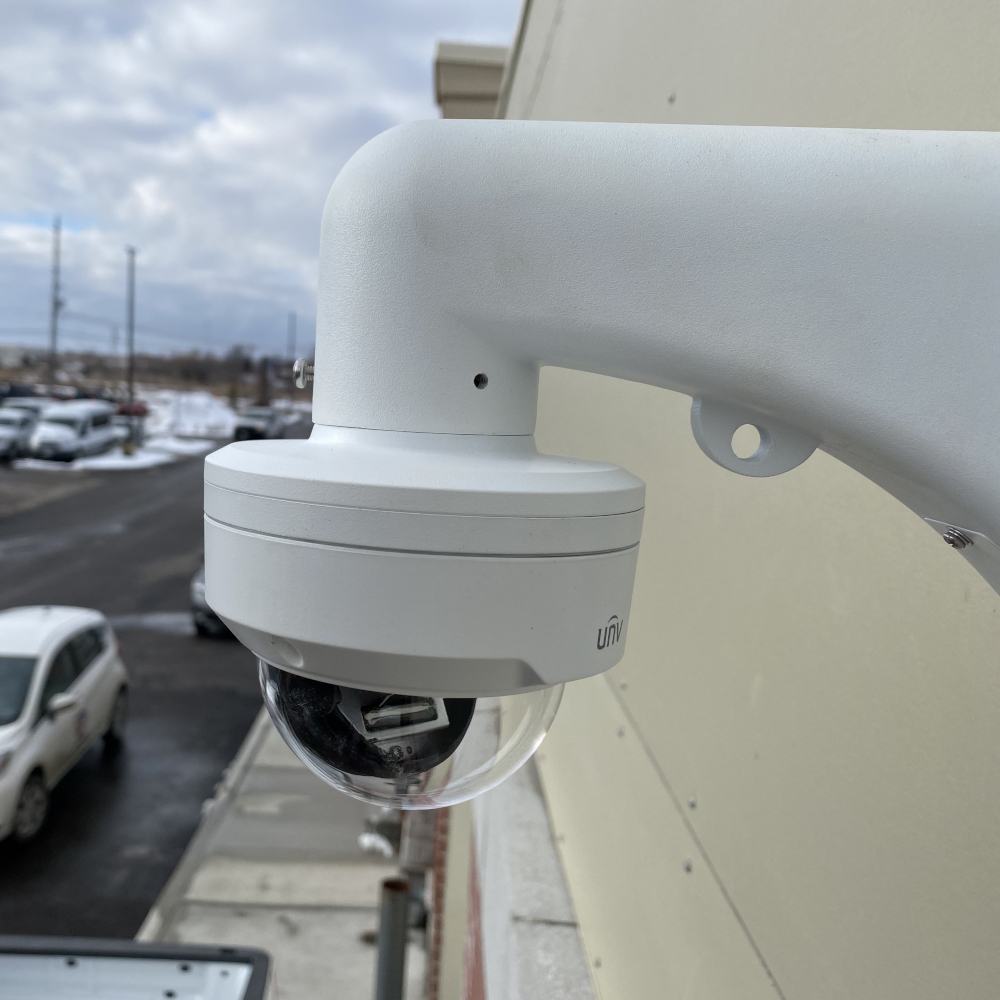
We carefully select and position each camera to deliver precise, comprehensive coverage for your facility.
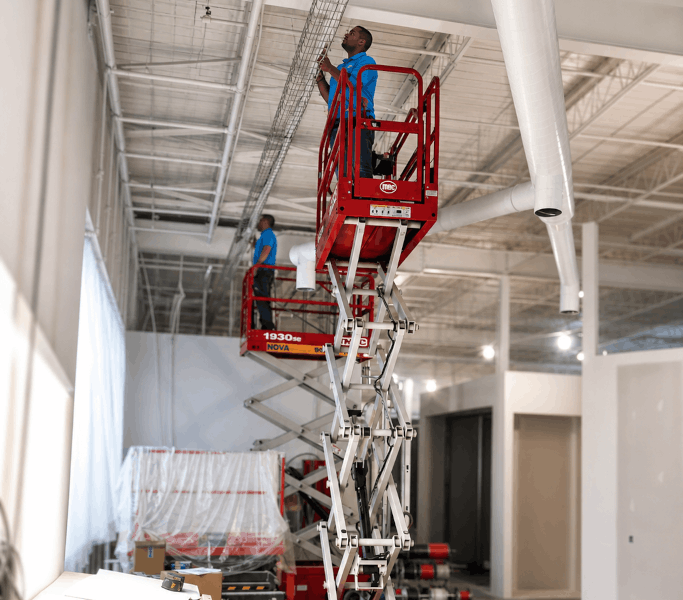
Our trained installers follow a proven, structured installation process.
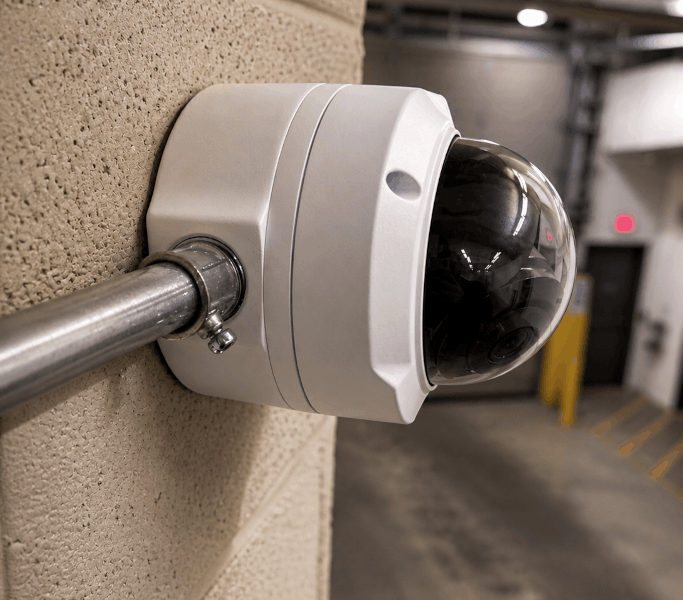
We partner with proven manufacturers and back every installation with the industry’s best three (3) year written warranty.
At Square Security, we deliver a complete range of camera surveillance solutions, including:
True professionals at the craft. Security Square has done several jobs for us and every job completed on time, professionally executed and with great service. I recommend Security… read more Square for all industrial/commercial projects. Keep up the great work!
Jeff Awdishu
Commercial surveillance systems are sophisticated technologies made up of many interconnected components. These systems can generally be broken down into the following three core categories.

Security cameras are the eyes of a surveillance system, strategically positioned throughout a property to provide continuous real-time visibility. They capture video footage and transmit it across the network for live viewing, recording, and playback.
Every camera within a surveillance system is designed with a specific objective in mind for one of three primary purposes:
Detect – Determine that a person, vehicle, or activity is present
Observe – Monitor actions and general activity within an area
Identify – Capture sufficient detail to positively identify a person or object
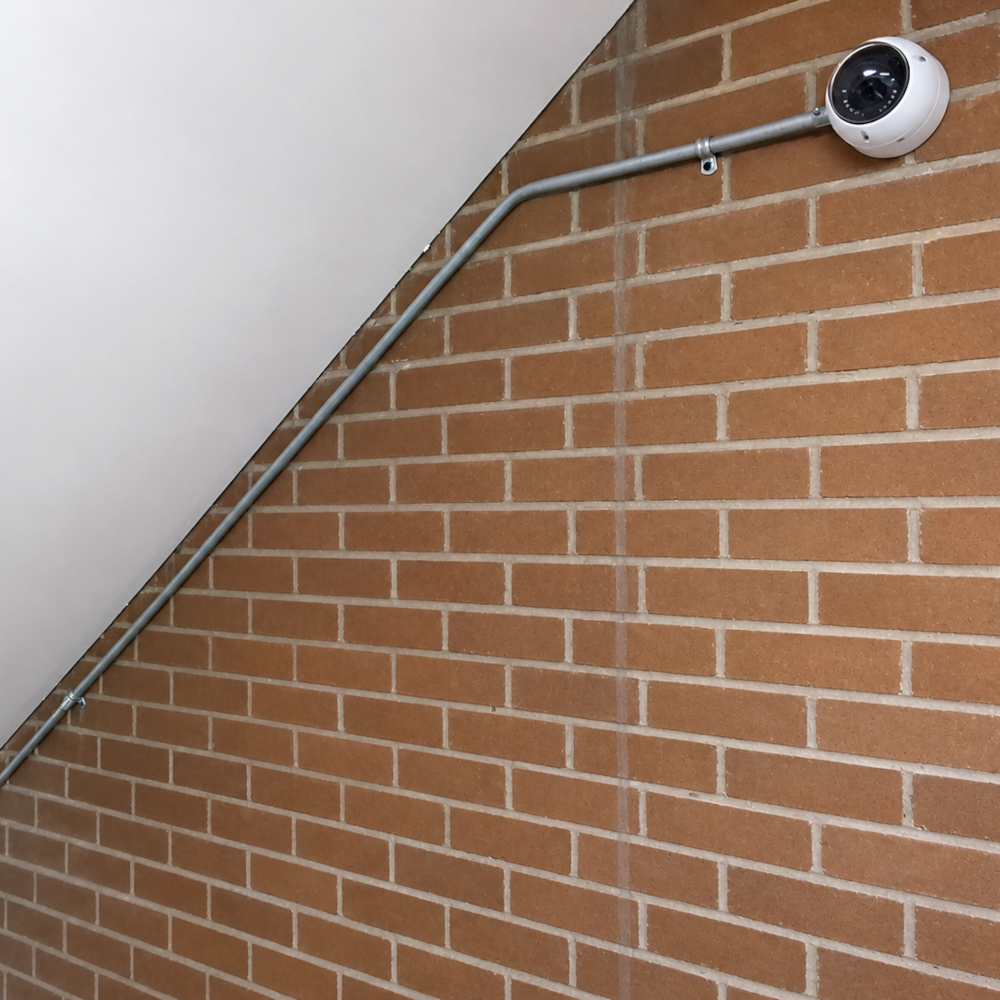
Security cameras connect to recording servers through network cabling, which transmits video footage for live viewing, recording, and remote access on computers and mobile devices. The most common cable types used in surveillance systems are Cat5e and Cat6.
Whenever cabling may be exposed or accessible to the public, we recommend installing it within metallic conduit to protect against intentional vandalism, accidental impact, and general physical damage. For outdoor applications, weather-sealed conduit fittings also help safeguard cables from environmental conditions such as UV exposure, rain, snow, ice, and salt, improving both reliability and long-term system durability.
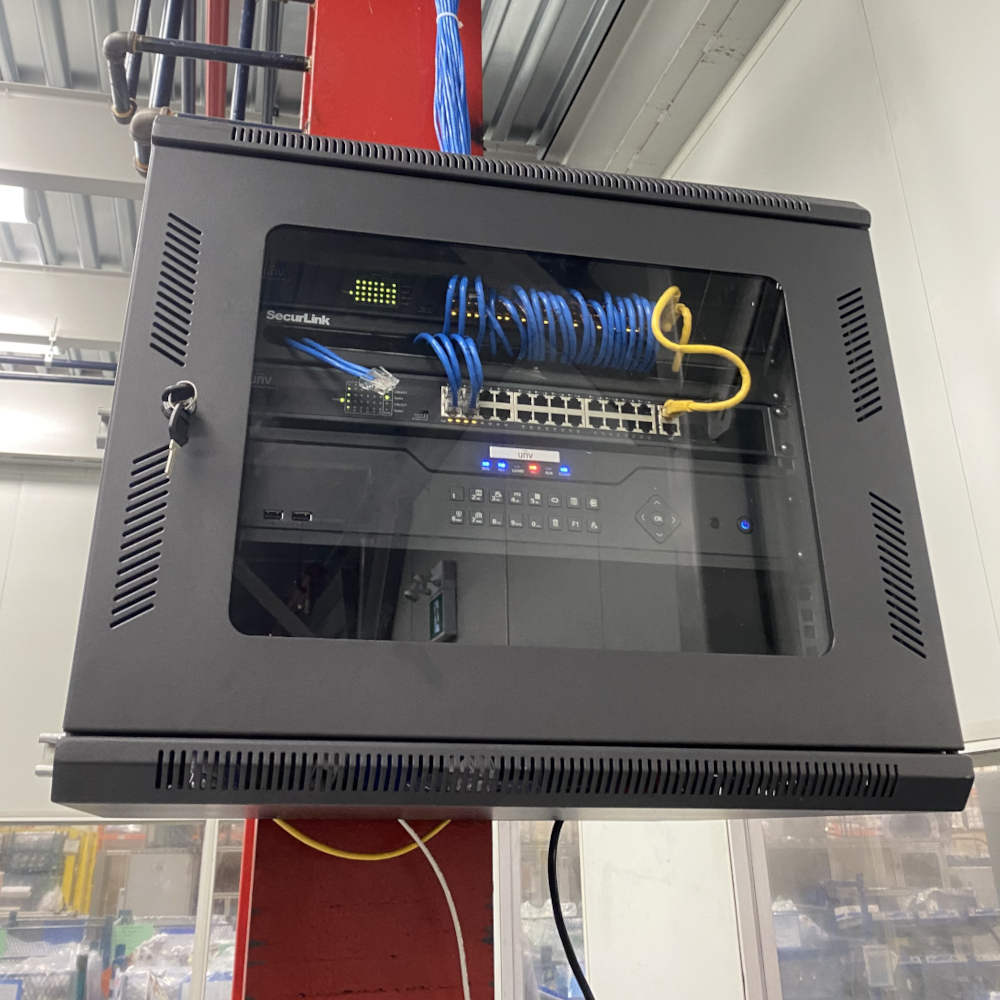
Security camera cables connect to network switches, which provide both Power over Ethernet (PoE) to power the cameras and network connectivity to transmit video data to the recording server.
Video feeds from security cameras are transmitted to recording servers, which can range from smaller Network Video Recorders (NVRs) supporting a limited number of cameras to large enterprise-grade server systems capable of managing hundreds of cameras across multiple locations. These recorders store video footage for future playback while also providing live video streaming to computers, mobile devices, and remote monitoring stations.

Video surveillance systems were once deployed primarily for security and loss prevention.
Today, modern surveillance platforms deliver far more than basic security monitoring. They have become valuable operational tools that improve safety, accountability, efficiency, and incident response across a wide range of environments.
Advancements such as remote viewing from anywhere, high-resolution imaging, intelligent analytics, and long-term video storage with rapid playback have expanded the capabilities of surveillance systems significantly. These technologies provide organizations with greater visibility, faster access to critical information, and meaningful insights beyond traditional security applications.

Modern surveillance systems are just as valuable for liability protection as they are for security. High-resolution video footage provides clear, reliable evidence that helps quickly resolve disputes, investigate incidents, and protect businesses and property owners from false claims.
In condominium corporations, surveillance coverage of common areas such as hallways, party rooms, elevators, and amenities helps identify individuals responsible for damages and allows costs to be charged back to the appropriate resident or unit owner.
Modern surveillance systems provide continuous visibility into daily operations, allowing you to monitor activity at any time from anywhere. Tasks such as verifying snow removal, garbage collection, deliveries, or contractor activity can be confirmed instantly through live or recorded video footage.
In manufacturing and warehouse environments, surveillance systems help ensure equipment is operating correctly, staff are following procedures, and shipments are being handled accurately. Video footage can also be used to verify what was loaded onto specific trucks, making it especially valuable for 24/7 facilities and multi-site operations.
In manufacturing and warehouse environments, surveillance systems help reinforce workplace safety by encouraging employees to follow established procedures and safety protocols consistently. Knowing activities are being recorded promotes accountability and reduces the likelihood of important safety measures being overlooked. Video footage can also be reviewed to investigate incidents, analyze near misses, and identify root causes to help prevent future occurrences.
In many cases, a professionally designed and properly installed surveillance system acts as a strong deterrent on its own. Criminals often look for easy targets, and visible, high-quality security measures can encourage them to avoid your property altogether and move on to a less protected building.
A well-secured property not only helps deter theft, vandalism, and unauthorized activity, but also increases overall safety and peace of mind for staff, residents, or visitors.
Modern surveillance systems are increasingly being used as powerful business intelligence tools for sales and marketing. Advanced camera analytics can provide valuable data such as customer traffic counts, peak activity times, occupancy trends, and movement patterns throughout a space. Heat mapping technology can also identify which displays, products, or areas attract the most customer attention, helping businesses optimize layouts, merchandising, and marketing strategies.
High-resolution cameras can also be leveraged beyond analytics to enhance customer engagement. In some applications, live video feeds are streamed online to provide real-time visibility for customers, such as showcasing current conditions at ski resorts, or golf courses.
While improving productivity is not the primary purpose of surveillance systems, cameras can often encourage greater accountability and professionalism in the workplace. Employees are generally more likely to follow procedures, remain punctual, and stay focused when they know activity may be monitored.
In many environments, the presence of surveillance alone helps promote responsible behaviour and reinforces workplace standards, even when footage is rarely reviewed.
Most modern IP security cameras range from 1080p (2mp) to 4K (8mp) resolution, but understanding which resolution is appropriate for a specific application is more important than simply choosing the highest number available.
Camera resolution refers to the number of pixels captured in an image. More pixels generally mean greater image detail and clearer video evidence. A standard 1080p camera captures approximately 2 megapixels, while a 4K camera captures roughly 8 megapixels — providing up to four times more image detail.
Higher resolution cameras can significantly improve image clarity, especially in large open areas where identifying faces, or fine details is important. However, increased resolution also comes with higher storage requirements and greater system costs. A 4K camera can require nearly four times the storage capacity of a 1080p camera.
Because of this, the correct camera resolution depends on the specific purpose of each camera and the size of the area being monitored. For example, 1080p cameras are often ideal for interior hallways and smaller spaces, while 4K cameras are better suited for large areas, parking lots, or grand lobbys where greater detail is required.
At Square, we design surveillance systems using a professional design approach known as Pixels Per Foot (PPF). Rather than guessing, PPF calculations determine whether a camera can reliably detect, observe, or identify individuals within a specific scene. This ensures every camera is properly selected and positioned to achieve the intended security objective while balancing image quality, storage requirements, and overall system cost.
Security camera storage is not unlimited. Once a system’s hard drive reaches capacity, the oldest footage is automatically overwritten by new recordings. This process continues throughout the life of the system.
If a surveillance system is not designed with adequate storage, critical footage may no longer be available when it is needed most. At the same time, excessive storage can add unnecessary costs. The key is determining the appropriate amount of video retention based on your operational requirements and compliance needs.
Surveillance storage capacity is measured in terabytes (TB). In general, larger hard drives allow for longer video retention periods, which are typically measured in days.
Before determining how much storage is required, the first step is deciding how long footage needs to be retained. This is known as the retention period and should always be established before selecting harddrives.
A common mistake is choosing a hard drive size first and hoping it provides enough storage. Proper CCTV system design works the other way around: determine the required retention period first, then calculate the storage needed to support it.
The ideal retention period depends on the application of the surveillance system.
Because every application is different, storage requirements should be evaluated based on the goals of the system and any operational or regulatory requirements.
Determining the correct amount of storage and the number of hard drives required for a surveillance system can be complex.
To ensure accurate system design, Square has developed a proprietary calculation formula that evaluates all key factors affecting storage requirements, including:
Each additional camera increases storage consumption.
Higher-resolution cameras require significantly more storage space. For example, a 4K camera require several times more storage than a standard 1080p camera.
Higher frame rates produce smoother video but also increase storage usage. Recording at 30 frames per second requires substantially more capacity than a lower setting of 12 frame rates.
There are three common recording methods:
Motion-based and hybrid recording methods can significantly reduce storage requirements depending on activity levels within the scene.
Business operating hours can significantly affect surveillance storage requirements. Facilities that operate 24/7 typically require more storage than businesses operating only during regular daytime hours.
Modern compression technologies and intelligent recording methods help reduce storage usage during periods of low or no activity by recording more efficiently. With experience across a wide range of industries and applications, Square understands how activity levels within each camera’s field of view impact overall storage requirements and system design.
Modern surveillance systems commonly use H.265 video compression, which significantly reduces storage requirements while maintaining high image quality, especially in high-resolution systems with extended retention periods.
Systems designed with storage redundancy for increased reliability require additional capacity and should be factored into the overall storage calculation.
Surveillance systems operate continuously, recording and writing data to storage drives 24/7. Because of this, the hard drives used in security systems must be specifically designed for constant operation. These specialized drives are known as surveillance-grade hard drives.
Unfortunately, many improperly designed systems use standard desktop computer hard drives instead. While these drives may function initially, they are built for intermittent use such as opening and saving files — not continuous recording. As a result, they often fail prematurely in surveillance applications.

At Square, we use trusted surveillance-grade drives such as Western Digital Purple and Seagate SkyHawk. These drives are engineered specifically for continuous video recording and are designed to provide the reliability required for professional 24/7 surveillance systems.
A surveillance system is only valuable if it is recording properly when an incident occurs. Without proactive monitoring and maintenance, issues such as failed hard drives may go unnoticed until critical footage is needed — only to discover it was never recorded.
For this reason, the health of your surveillance system should be monitored regularly. In many cases, this can be handled internally by your staff through routine system checks and playback verification.
Square also offers preventative maintenance and system health monitoring programs designed to proactively identify and resolve issues ensuring critical footage is available when it is needed most.