
Card and fob access control systems let you manage who can enter your facility—and when. Each user is issued a unique credential for quick, secure entry via a reader.
Access can be tailored by user, door, and schedule (e.g., business hours, 24/7, or restricted areas), and credentials can be revoked instantly if lost or no longer needed—eliminating rekeying.
Doors can also be automated to unlock during business hours and switch to secure, credential-only access after hours, weekends, or holidays.

We conduct a detailed site assessment and collaborate with you to identify optimal locations for card and fob access points—ensuring you achieve the highest level of security within your budget.
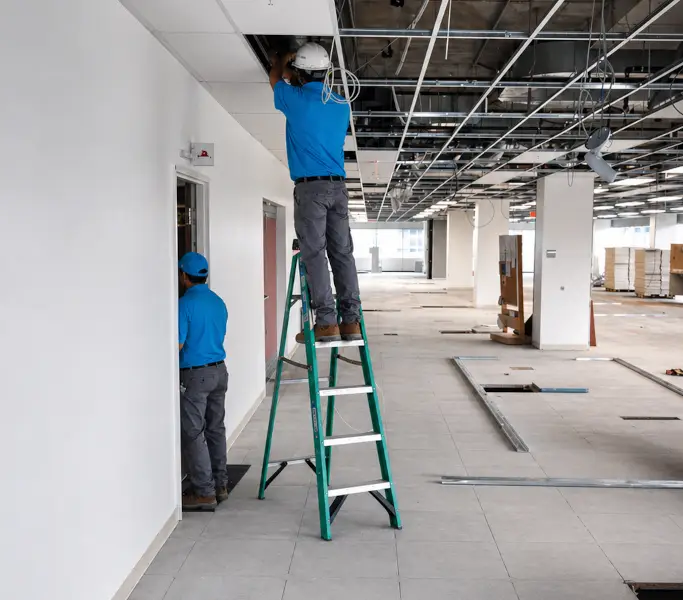
Our trained installers follow a proven process to ensure your system is installed for long-term reliability and meets all local building codes.
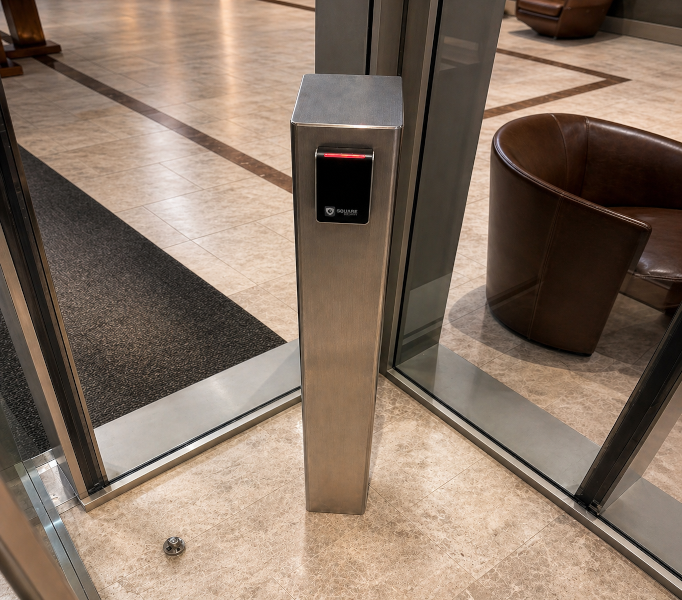
We partner with proven manufacturers and back our installations with the industry’s best three (3) year written warranty.
At Square, we deliver a fully turnkey card and fob access control solution, handling every stage from design through ongoing support.
Our services include:
Mark, and his TEAM are knowledgeable, listen and understand what your needs are. They were on time, finished the job on schedule and went the extra mile to ensure that… read more the work was done correctly and ecstatically looked GREAT!
Mark spent time and trained us with patient while we learned the software.
Our company will be using Square Security for all our security needs and would highly recommend them.
Professional ALL THE WAY!!!
Jacqueline Dawes
The most basic—and widely recognized—form of access control is the traditional key and lock. While this approach works well for a private home with only a handful of keyholders, it quickly becomes inefficient and risky in commercial buildings and multi-tenant residential properties.
As the number of users grows, so do the challenges of mechanical key systems.
If a key is lost or stolen, maintaining true security requires replacing multiple locks and reissuing new keys to everyone.
Even when a breach is identified, action isn’t immediate—you’re dependent on a locksmith to re-secure the property.
Anyone with a key can enter at any time, with no ability to restrict access to specific hours or expiries.
There’s no way to track who accessed a door or when, leaving gaps in accountability and security oversight.
Card access systems replace keys with secure credentials—typically fobs or access cards—issued to employees or residents. Each credential carries a unique encoded ID. When presented to a reader, that ID is transmitted to the system’s control panel, which instantly verifies whether the user is authorized to access that specific door at that specific time.
Assign permissions by user, door, and schedule. For example, Bob can access a room from 9 AM–5 PM, while Mary has 24/7 access.
Lost fob or terminated employee? Simply disable that credential from your phone or computer—no need to replace locks or reissue other users’ fobs.
Every access event is recorded, allowing you to see who entered which door and when.
Easily manage multiple doors with unique settings for each user or credential.
Receive alerts if a door is forced or left open

A credential is the identifier used to authenticate a user at a door. Common formats include key fobs, access cards, and mobile phones.
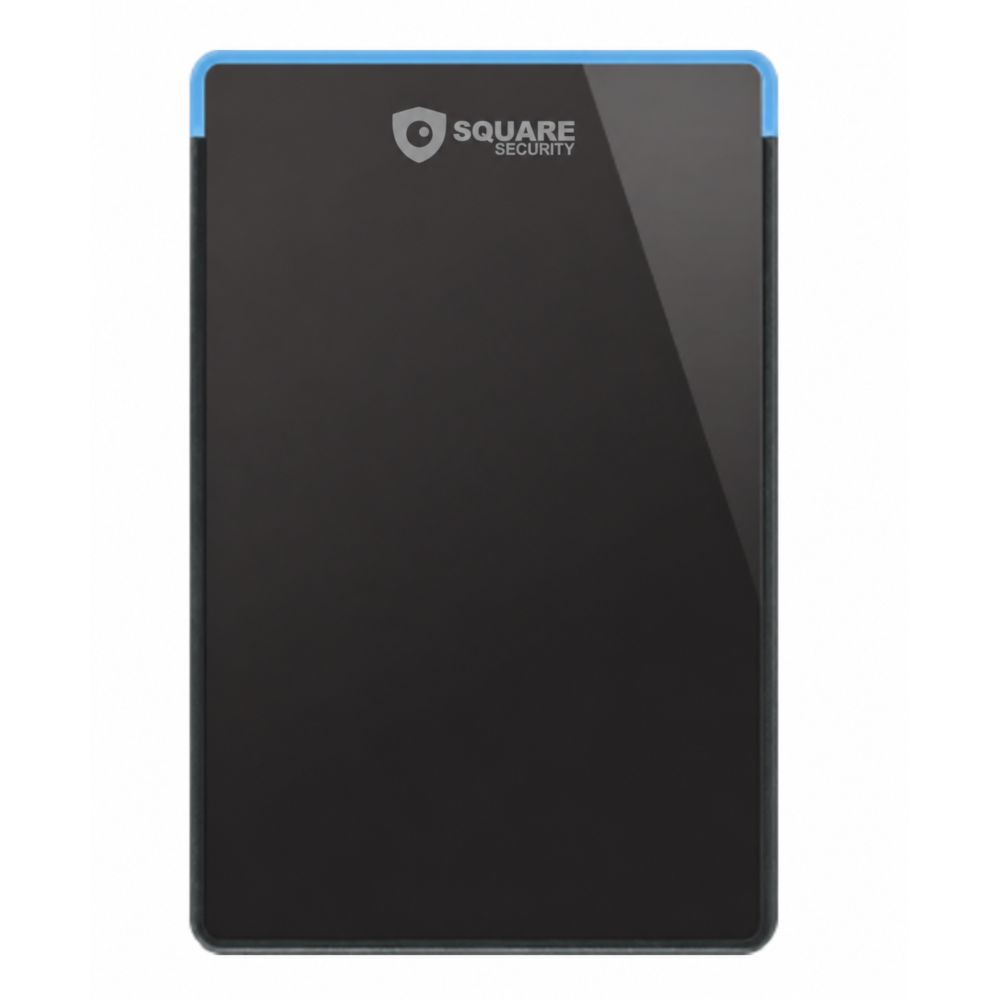
Installed at the entry point, the card reader captures credential data when a user taps or swipes. This data is transmitted to the control panel for validation against predefined access rules (e.g., permissions, schedules).
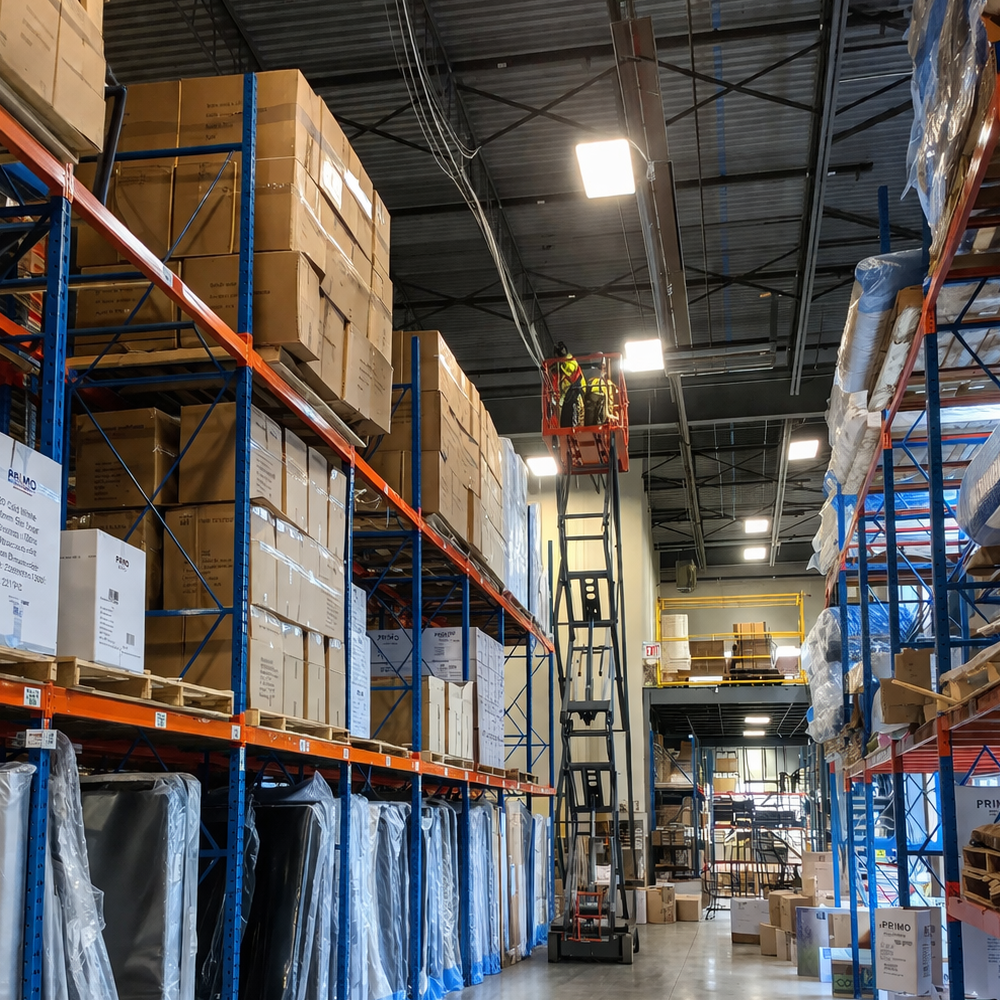
Cabling connects system components, transmitting data between readers and control panels, as well as signals related to door status and locking hardware. To ensure reliability and security, exposed wiring should be protected—typically within metallic conduit—to prevent damage from weather or vandalism.
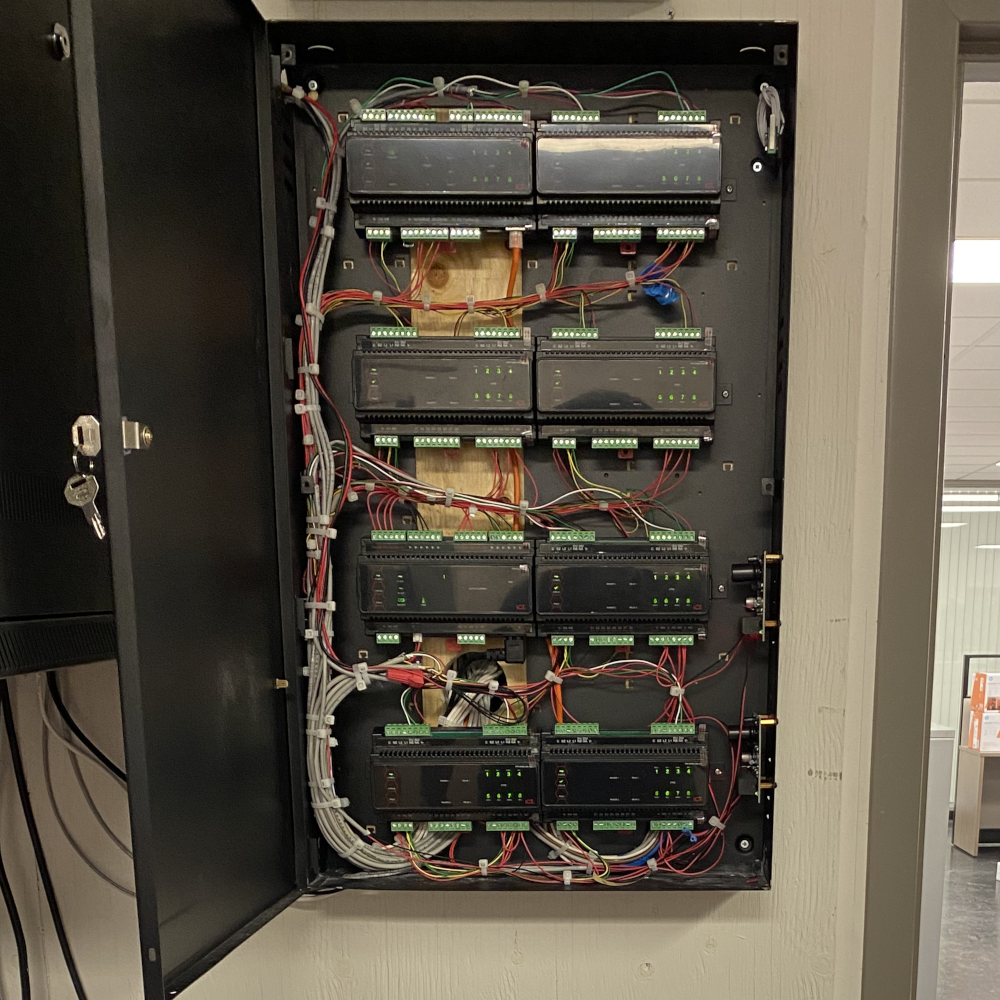
The control panel serves as the system’s central processor. It maintains the credential database and enforces access policies, determining whether a user is authorized based on configured permissions and schedules. Panels should be installed in a secure, restricted location.
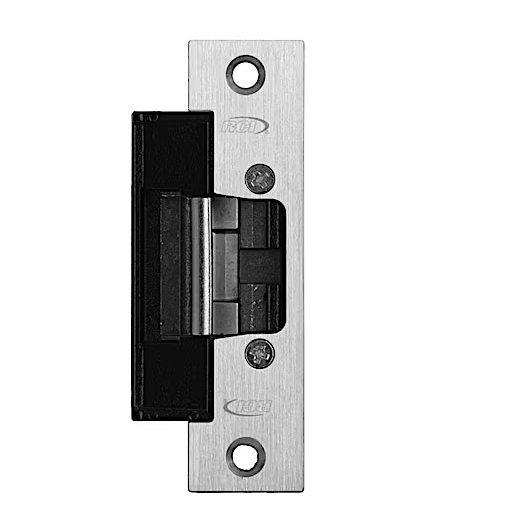
Electric strikes are door-mounted locking devices controlled by the system. When access is granted, the control panel energizes the strike, temporarily unlocking the door.
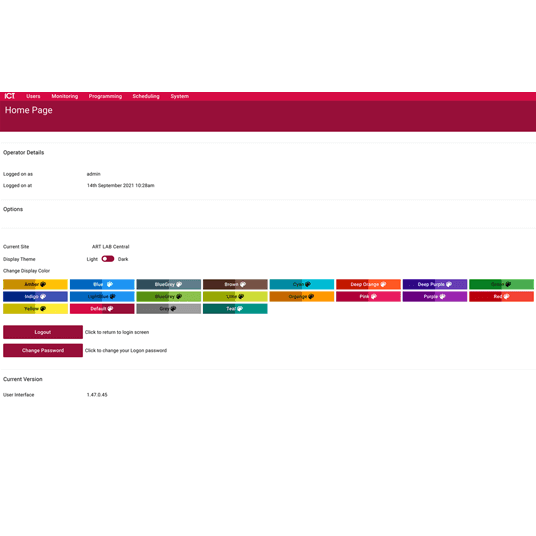
Modern access control system includes browser-based management software that allows administrators to configure access permissions, schedules, and system settings. These platforms typically require no local installation and are accessible via standard web browsers (e.g., Chrome, Edge, Safari, Firefox). Administrators can add or remove users, update access rules, and review audit logs from any network-connected device.
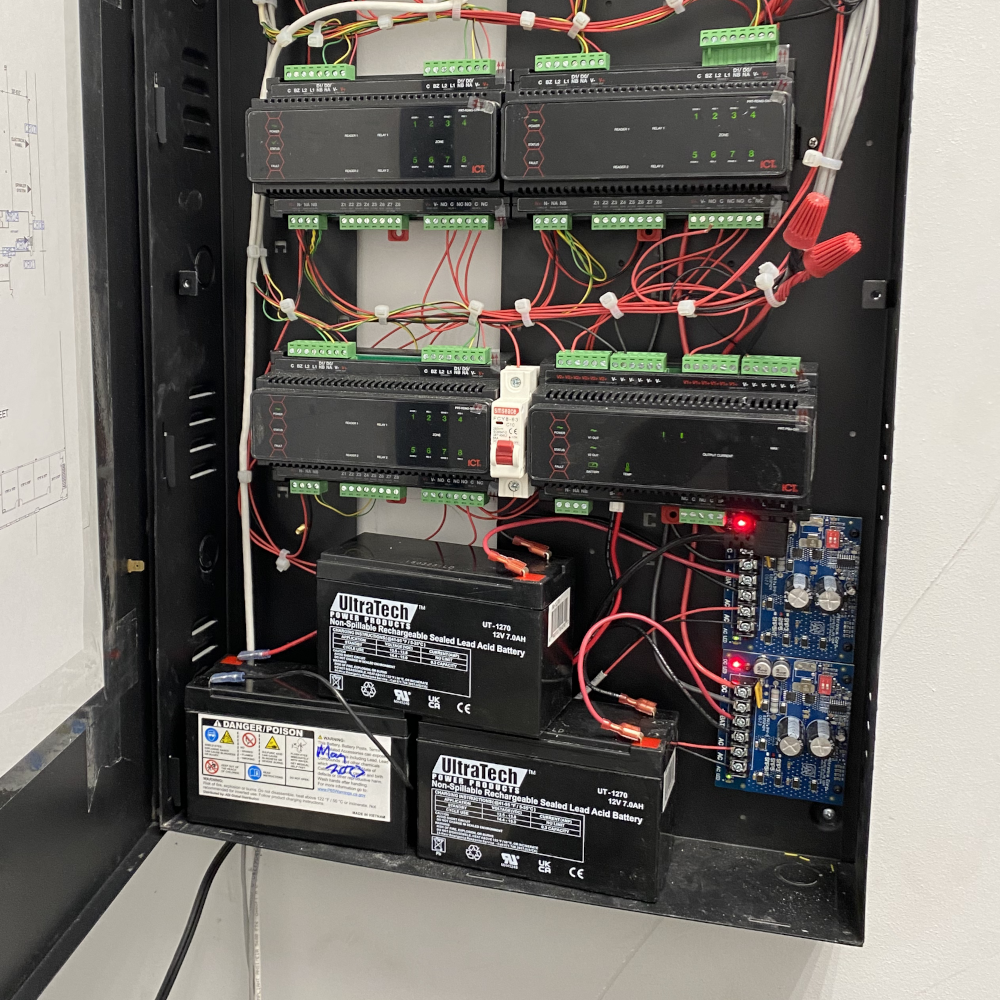
Power supplies convert standard 120VAC building power into the low-voltage DC required to operate access control hardware, including controllers, readers, and locking devices.
To maintain operation during outages, systems are paired with a battery backup. Depending on the application, backup capacity can be engineered to bridge short interruptions until a building generator comes online, or to sustain the system for extended periods where no auxiliary power is available.
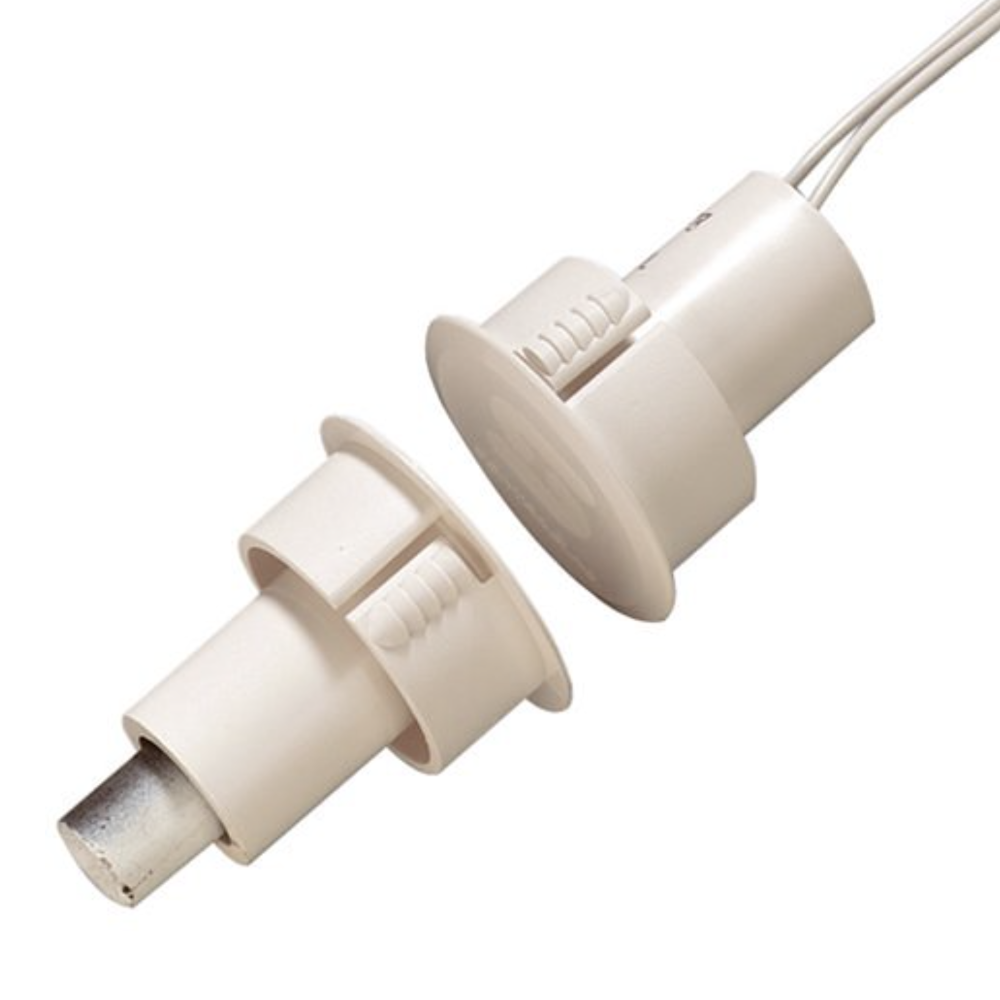
Installed at the door, these sensors report real-time open/closed status to the system. With door position contacts in place, the platform can trigger alerts for forced openings or doors left ajar beyond a defined threshold.
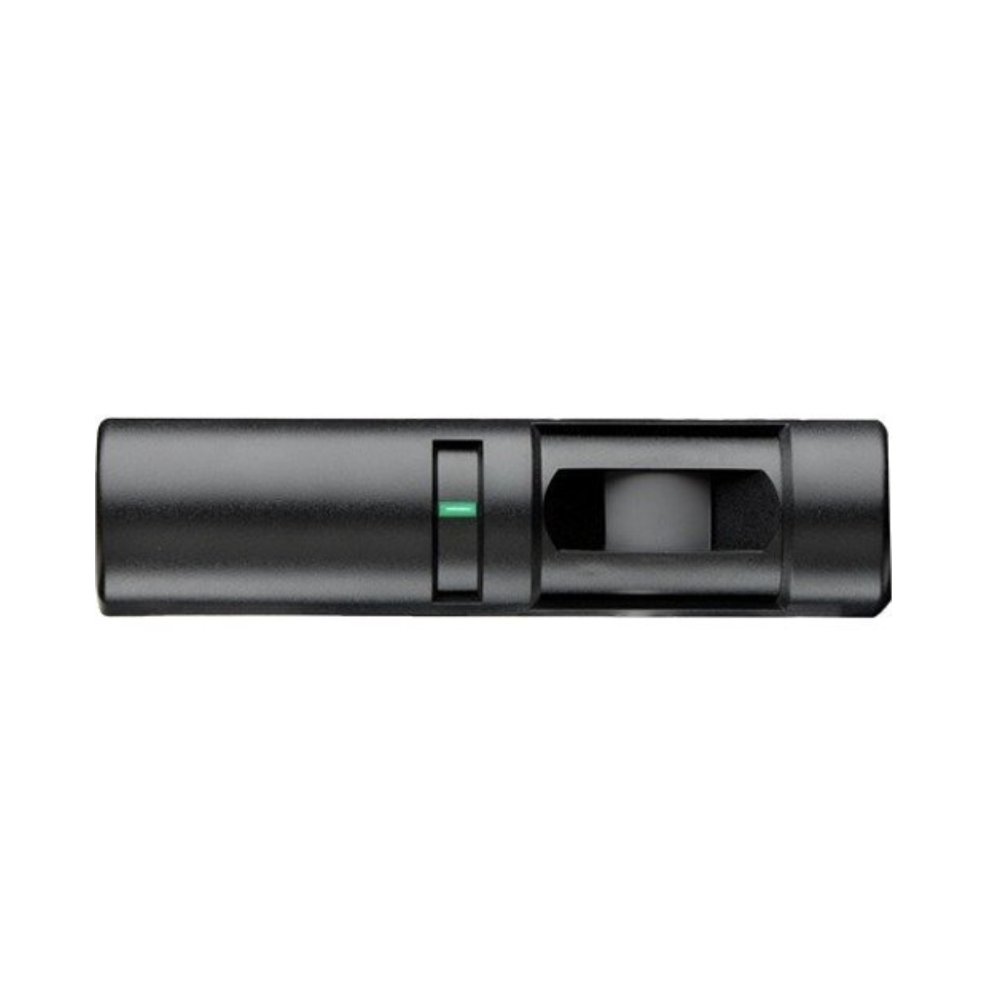
Request-to-exit (REX) motion sensors are typically installed above the door to signal that someone is exiting. When combined with input from the door position contact, the controller can distinguish between a legitimate egress and a forced entry from the exterior—providing the appropriate alerts.

Selecting the right solution starts with a clear understanding of how manufacturers, installers, and property owners interact. Most commercial access control manufacturers design both the hardware and software platforms, which are typically bundled and sold through authorized installers. These installers are responsible for system design, professional installation, and ongoing service and support for the property owner.
A successful fob-based access control system depends on selecting a manufacturer with a proven track record and an installer with the expertise to deploy and support the system throughout its lifecycle.
With hundreds of access control manufacturers in the market, product quality and support can vary significantly. Square prioritizes solutions from established manufacturers with a strong presence and multiple certified installers in the Toronto area. This approach ensures your system is well-supported over its lifecycle and avoids dependency on a single vendor or proprietary channel.
Beyond selecting a reputable product, it’s critical to align the system with its intended application—for both operational efficiency and long-term cost control. In the Toronto market, it’s not uncommon for systems to be misapplied due to installer bias or limited product familiarity.
At one end of the spectrum, large national providers often recommend complex enterprise platforms where a streamlined commercial system would be more appropriate. For single-site or smaller properties, a clean, intuitive interface and right-sized functionality typically deliver better performance and user adoption than unnecessary and costly enterprise features.
Conversely, some manufacturers position commercial-grade systems as enterprise-capable. Installers may rely on these claims, only to encounter scalability and performance limitations after deployment—when hundreds or thousands of doors are already online and replacing the system becomes disruptive and extremely costly.
Square takes a consultative approach to system design, ensuring the selected platform aligns with your operational requirements, scale, and growth plans—helping you avoid costly missteps from the outset.
At Square, we understand that every business has unique operational requirements, security concerns, and long-term goals. That is why we take a consultative approach, working closely with you to evaluate your needs, understand your day-to-day operations, and recommend a solution that is both effective today and scalable for the future. Whether your project involves a small commercial property, a multi-tenant residential building, or a large enterprise environment, our team will help design a system tailored specifically to your application and budget.
Modern security and access control systems offer a wide range of features, integrations, and customization options. Selecting the right combination of technologies can significantly improve security, convenience, and operational efficiency. Below is a brief overview of some of the key features, capabilities, and system options available.
A access control system should support fully customizable schedules and access levels without practical limitations. Schedules can automatically unlock designated entry points during specific hours, while access levels define who can enter, when, and where.
For example, office staff may be granted access Monday to Friday from 7:00 a.m. to 7:00 p.m., while managers have 24/7 access. Permissions can also be assigned at the individual door level—ensuring employees can only access areas relevant to their role, such as restricting plant access to personnel with the required training.
The user interface of any system should be modern, easy to use and tailored to the environment in which it is deployed.
For small commercial systems, operators are often not dedicated to the platform full time. The interface must be intuitive for non-expert users and enable quick, efficient interaction.
For enterprise systems, multiple operators typically require different levels of access, restrictions, and configuration. The platform should support role-based permissions and allow customization based on each operator’s responsibilities. For example, a security guard may prioritize monitoring live, on-site events, while a system administrator focuses on managing cardholders and system settings.
Event and alarm monitoring is a core function of any access control system, providing a comprehensive, real-time view of everything happening across your deployment. The system continuously logs all activity, creating a detailed audit trail that includes access events (such as granted and denied entries), door activity (open, closed, forced, or held open conditions), and system-level alarms.
Beyond security events, card access platforms also monitor the health and status of system components—alerting administrators to faults or performance issues before they become critical failures.
These logs are time-stamped, searchable, and reportable, enabling operators to quickly investigate incidents, verify compliance, and maintain operational oversight.
Different environments demand different architectures. In high-security deployments, data should remain on-premises to maintain full control and compliance. For smaller businesses, cost efficiency is often the priority—making it desirable to avoid recurring cloud hosting fees.
We offer both models. Our fob solutions are available as cloud-based or fully on-site systems, allowing you to align infrastructure with your operational and budgetary requirements. For commercial applications under 100 doors, we also offer server-less configurations, where all data is stored directly within the controller—eliminating the need altogether for an on premise or cloud server.
We partner exclusively with manufacturers that have decades of proven performance in the field. That track record matters—it means the platform is stable, issues have been resolved over time, and replacement parts and expansion options remain available well into the future.
Be cautious with newer entrants in the access control space. We’ve seen start-ups disappear, leaving customers with unsupported systems and no viable path forward other than a full rip-and-replace. The same risk can emerge when established brands are acquired and product lines are eventually sunset, cutting off parts and support.
Long-term reliability is about the manufacturer behind the product. Selecting the right partner upfront protects your investment for years to come.
Remote access should be a standard option. It allows you to manage the system, make changes, and respond to issues from home or another location—without being physically on-site.
Importantly, remote access is not the same as a cloud-based system. Some manufacturers position the cloud as the only way to connect remotely, but that isn’t the case. Properly configured on-premise, network-based systems can also be accessed securely from off-site locations.
There’s a practical benefit as well: reduced service costs. With remote connectivity in place, many issues can be diagnosed and resolved without dispatching a technician, for a faster and more cost effective resolution.

Whether you’re deploying a commercial or enterprise system, scalability should be built in from the start. Most commercial platforms support anywhere from a single door to roughly 100 doors.
Enterprise systems, by contrast, should offer effectively unlimited expansion to accommodate future growth without requiring an upgrade to hardware already deployed.
Your access control system is already monitoring doors—integrating it with an intrusion detection system significantly increases its value.
An integrated platform streamlines user management. Instead of issuing a card in one system and creating a separate alarm code in another, both credentials are managed through a single interface. This “single pane of glass” approach reduces administrative overhead and minimizes errors.
It also centralizes visibility. Events from both the access control and intrusion systems are logged and viewed in one place, improving situational awareness and simplifying investigations.
If your building includes elevators, select a card access system with floor-level control. Restricting access by floor adds a critical layer of security—ensuring occupants can only reach authorized areas directly from the elevator.
Commercial access control systems typically provide basic elevator control. For more complex scenarios, an enterprise-grade platform is often required to deliver the necessary flexibility, scale, and integration.
Enterprise systems should be architected for multi-site deployment, enabling a single platform to scale across an organization’s entire property portfolio. This supports a unified credential deployment—employees carry one card, with permissions centrally assigned and updated across all locations. When an employee leaves, access can be revoked system-wide from a single point of control.
There should be no practical limits on doors, cardholders, or sites. With appropriate licensing and server resources, the system should scale continuously to meet growing operational demands without requiring a platform change.
Enables operators to visually verify events in real time. With proper video integration, each access transaction is paired with a corresponding video clip—allowing security staff to confirm that the correct individual used the appropriate credential at that reader or quickly confirm a door alarm status.
For enterprise deployments, redundancy and backup are essential. Redundant architecture enables failover to standby servers, maintaining system availability if the primary server is offline.
Automated backups ensure current copies of the system are preserved, allowing for rapid recovery in the event of a failure or catastrophic loss.
Advanced elevator integrations extend access control beyond simple floor unlocking, supporting both traditional and destination dispatch systems.
In traditional elevator environments, the system can do more than enable floors—it can track user selection. For example, if a user is authorized for floors 2, 3, and 4, those buttons are temporarily enabled upon credential presentation. Once a selection is made—say, floor 3—the system logs that specific choice and immediately re-secures the remaining floors, preventing additional or unintended stops.
For destination dispatch elevators, enterprise platforms integrate at the software level with the elevator control system. This enables fully management of floor permissions, allowing access rights to be assigned, modified, and enforced dynamically through the access control platform, without relying on separate elevator programming.
If you need to change software platforms in the future, the last thing you want is a full hardware replacement. In the enterprise space, open-architecture controllers address this risk. Manufacturers can load their firmware onto standardized hardware—most commonly Mercury-based controllers—allowing you to change software licenses and firmware without replacing the physical controllers.
This approach protects your investment and reduces vendor lock-in. It also mitigates risk if a manufacturer exits the market or discontinues a product line—situations that are not uncommon. For larger deployments (typically 250+ doors), specifying open hardware that can support multiple manufacture’s firmware is a prudent strategy to protect your investment.
For systems managing thousands of cardholders, administering users one at a time quickly becomes inefficient, error-prone, and costly. Our enterprise platforms address this by integrating directly with sources such as HR systems and Microsoft Active Directory, enabling centralized and automated user management.
With this approach, access rights are tied to a user’s role, department, or employment status rather than being manually assigned. When an employee is onboarded, updated, or terminated in the HR system or Active Directory, those changes automatically propagate to the access control platform—ensuring permissions are always accurate and up to date.
This level of integration not only reduces administrative overhead but also strengthens security and compliance. It enforces consistent access policies across the organization, minimizes the risk of orphaned credentials, and provides a single, authoritative source for managing who has access to which doors, at any time.
This is one of the most common questions we receive—and the honest answer is: it depends. Pricing is typically evaluated on a cost-per-door basis, but several factors can significantly influence that number.
Running cable to a couple of doors in a small 3,000 sq. ft. office is straightforward. In larger facilities, especially industrial sites, longer cable runs and more complex infrastructure can quickly increase installation costs.
While total project cost rises with more doors, the cost per door usually decreases. A single-door installation typically ranges from $3,000–$5,000, whereas additional doors often fall between $1,500–$3,000 each.
Installation is faster and more cost-effective in drywall offices or open-ceiling warehouses. In contrast, older or historic buildings—common in Toronto—often feature thick masonry walls, which add complexity, time, and labour.
If electric strikes aren’t already installed, expect an additional $400–$800 per door. New construction projects can reduce costs by specifying doors pre-configured with strikes. In retrofit scenarios, existing hardware may be reused if it’s compatible and in good condition.
Reliable access control depends on proper door function. Doors must close and latch securely. In some cases, existing hardware is sufficient; in others, upgrades to closers or latching mechanisms are required to ensure security.
Costs here scale with the number of users, not doors. Most systems require a credential per user, plus extras for replacements and growth. Expect $8–$20 per fob, depending on security level.
For an accurate estimate, a site assessment is essential. Each building presents unique conditions that impact final pricing.